Scrolling through any social feed in 2026 feels like wandering through a digital toy factory that never closes. Every other post shows a miniature warrior perched on a glowing keyboard, a cartoon sidekick frozen mid-dance inside a transparent box, or a gun‑toting avatar sitting beside its own Blender blueprint. At first glance, these images scream late‑night crunch sessions by a sleep‑deprived 3D artist. The truth wobbles far closer to home: they are dreamt up in seconds by a large language model moonlighting as a sculptor. Think of Google’s Gemini as a sort of pocket‑sized daemon that assembles whole dioramas from nothing but a photo and a carefully whispered spell.
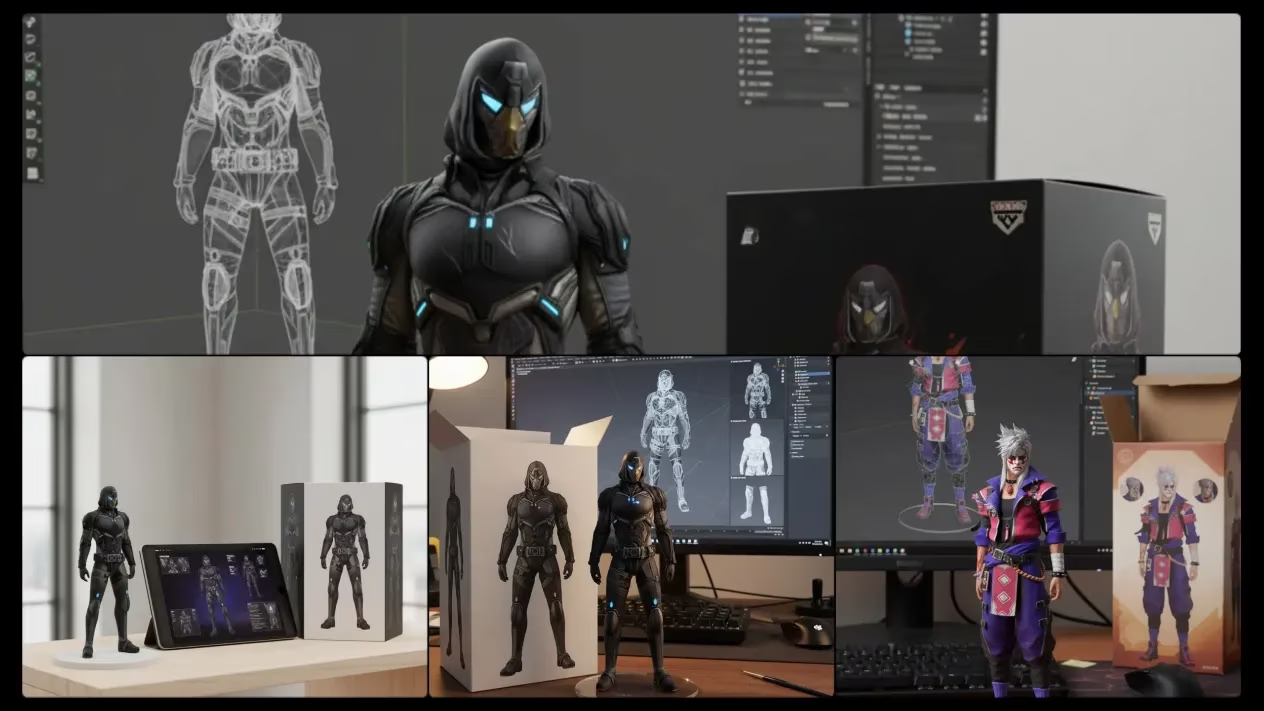
For the uninitiated, the magic lives inside Google AI Studio, inside a tool called the Neno Banana Model. That name sounds like a rejected Saturday‑morning cartoon sidekick, but it works like a tireless apprentice who can conjure a museum‑grade collectible before a microwave beeps. Unlike earlier AI image generators that sprayed random polygons like untamed garden hoses, this one observes the uploaded selfie or character art and builds a coherent little universe around it — complete with packaging, desk clutter, and the very software that allegedly birthed the figurine.
The Toolbench (a.k.a. What One Actually Needs)
No Cintiq tablet, no dusty graphics degree, no secret invite to a closed beta. The setup is so laughably minimal it could fit inside a lunchbox:
-
🧠 A smartphone or laptop with a functioning browser
-
🌐 A reasonably stable internet connection
-
🍌 Access to Google AI Studio’s Neno Banana Model (free and public at the time of writing)
That’s it. No installation, no GPU rentals. The real horsepower sits in Google’s cloud, gnawing on the prompt like a gourmet chipmunk.
The Ritual: From Photo to Shelf‑Ready Figurine
Step 1 – Enter the Workshop
Fire up Chrome, tap in “Google AI Studio,” or steer straight to the official page. Gemini’s regular chat window works too, but the Studio route turns the volume knob up on speed and resolution. It’s like choosing between a Swiss Army knife and a fully‑equipped laboratory benchtop.
Step 2 – Wake the Neno Banana
Once inside, pick the Neno Banana Model for image creation. Think of it as the tiny digital homunculus that translates plain English into light, shadow, and polyethylene wishes.
Step 3 – Feed It a Hero
Upload a crisp character image. A crucial trick hides here, one that many early explorers missed: the output mimics the input’s proportions. Want a tall, portrait‑style box art? Feed a vertical photo. Prefer a landscape battle station? Make sure the uploaded shot stretches horizontally. The AI mirrors that ratio as faithfully as a pastry chef following a macaron recipe.
Step 4 – Hum the Prompt
Now the real alchemy begins. Copy‑paste one of the incantations below, tweak a few adjectives, and press generate. The first image congeals in roughly the time it takes to butter a slice of toast.
The Grimoire of Prompts
Below are community‑loved spells, each producing a distinct flavor of plastic fantasy. All start with the uploaded character and spin it into a different workshop scene.
| 🏷️ Prompt Flavor | 🌟 One‑Liner Vibe |
|---|---|
| Original Prompt 1 | Classic desk showcase with ZBrush interface and Bandai‑style box |
| Prompt 2 | Photo‑real Blender setup, acrylic base, looking ridiculously professional |
| Prompt 3 | Anime‑aesthetic 1:8 scale on a wooden shelf, minimalist daylight |
| Prompt 4 | Stop‑motion claymation on a messy mini‑workbench, hand‑drawn box |
| Prompt 5 | Steampunk gears, brass monitor, and an engraved metal base |
| Prompt 6 | Cyberpunk neon desk, holographic screen, hexagonal LED base |
| Prompt 7 | Life‑size digital painting concept, moody background, no visible base |
For those who prefer a read‑cut‑paste approach, here are the first two fan‑favourites in full detail:
Original Prompt 1
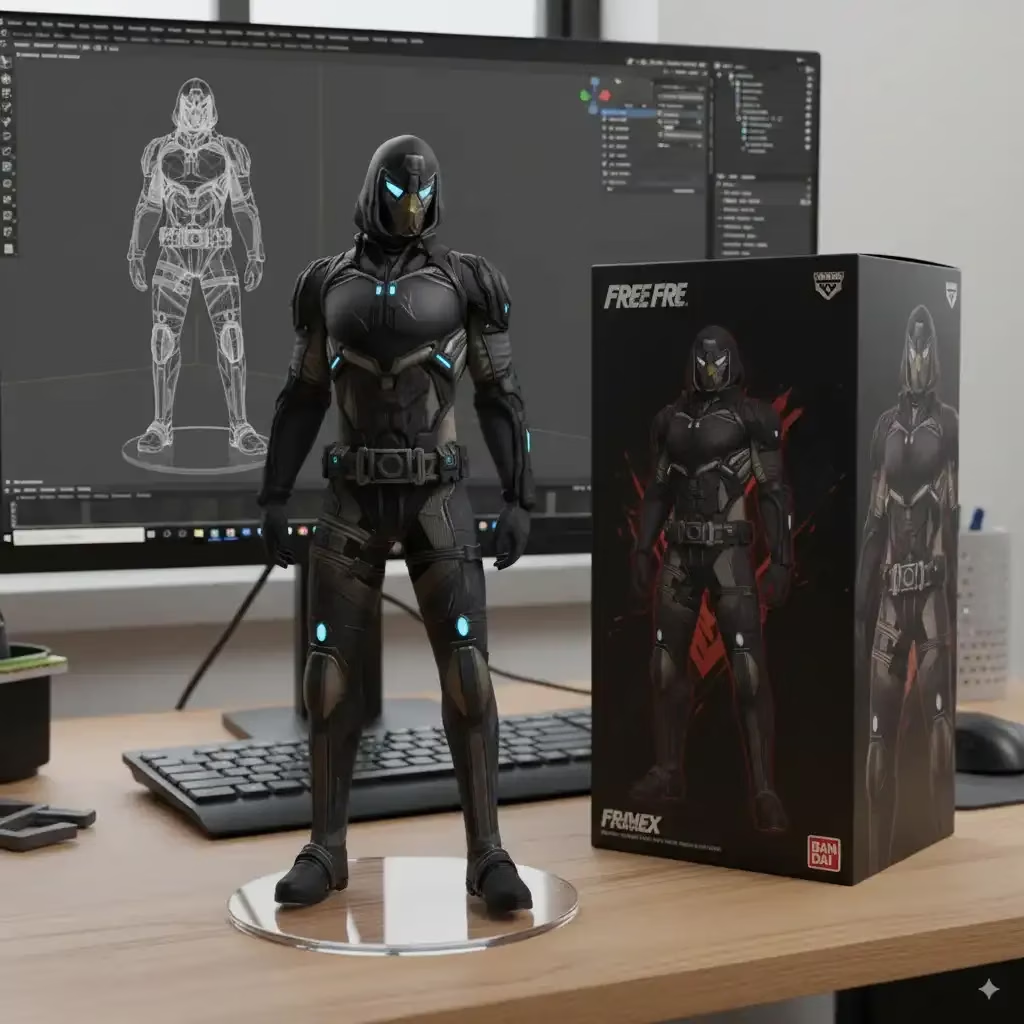
Create a 1/7 scale commercialized figurine of the characters in the picture, in a realistic 1:1 style, in a real environment. The figurine is placed on a computer desk. The figurine has a round transparent acrylic base with no text on the base. The content on the computer screen is the Zbrush modeling process of this figurine. Next to the computer screen is BANDAI-style toy packaging box printed with the original artwork. The packaging features two-dimensional flat illustrations.
Prompt 2
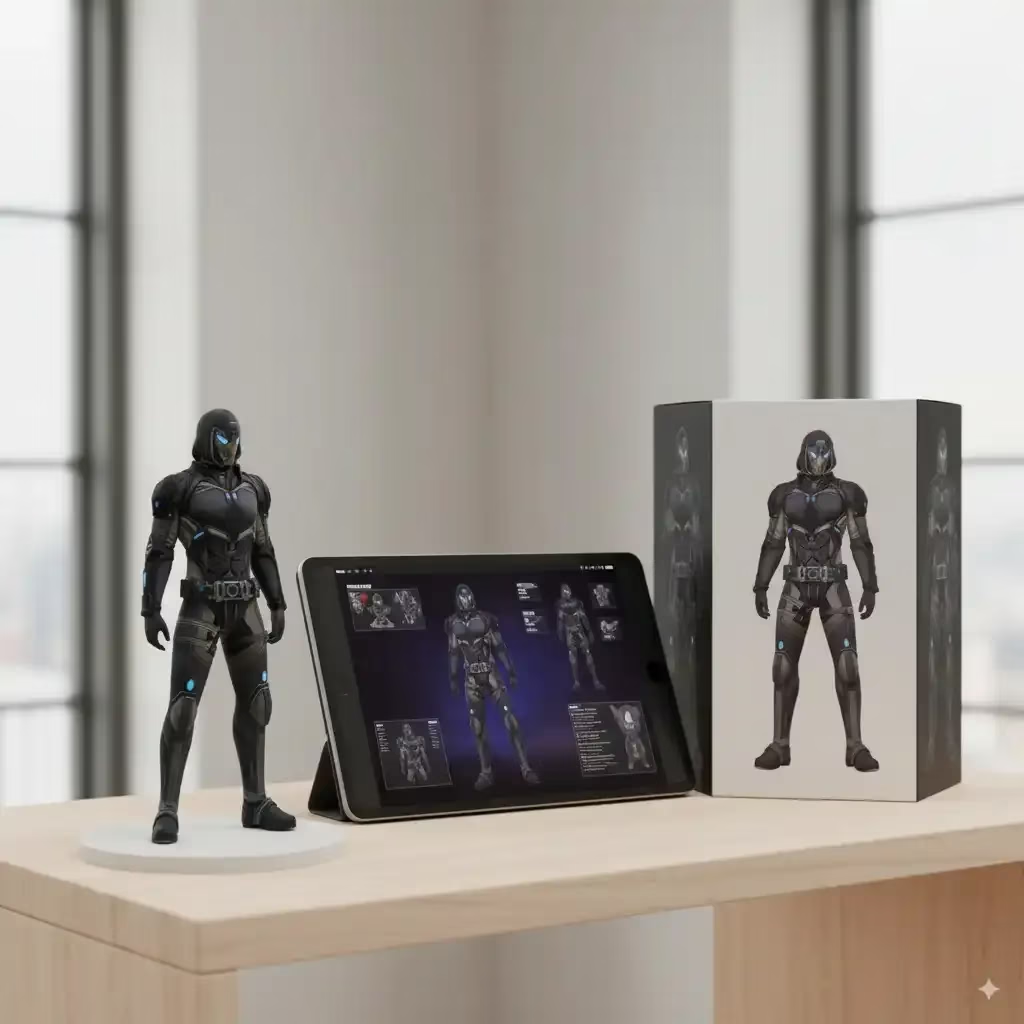
Create a commercialized figurine of the character in the picture, in a realistic 1:1 style, in a real environment. The figurine is placed on a computer desk. The figurine has a round transparent acrylic base with no text on it. The computer screen in the background shows the Blender interface where this figurine is being designed. Next to the computer screen is a BANDAI-style toy packaging box printed with the original artwork. Make the image look highly realistic and natural as if a real 3D model artist created it.
Tuning the Scene Further
Once the basic recipe starts to feel like a comfortable pair of slippers, a few extra phrases can tilt the output into wild new territories:
-
“The figurine is placed on a gaming desk with RGB lights, a mechanical keyboard and a gaming mouse.” — perfect for Twitch‑throne energy.
-
“The figurine is placed inside a glass showcase with LED lights glowing around it.” — turns the character into a museum exhibit.
-
“The figurine is placed on a garden table with natural sunlight and trees in the background.” — a picnic diorama for pixel heroes.
The AI chews these additions like a short‑order cook blending smoothie ingredients, folding them into the final render.
Why Google Gemini Neno Banana Model Eats Other AIs for Breakfast
Many have tried the same prompt on rival platforms, only to receive a visual smoothie of melted plastic and mismatched shadows. The Neno Banana Model, however, treats each request like a miniature movie set — it builds consistent lighting, plausible reflections, and even mimics the dust particles on a monitor. It’s the difference between a stage magician and an actual wand‑wielding sorcerer. For the player who just wants their Free Fire gladiator to look as if it just stepped out of a limited‑edition crate, Google’s studio remains the golden standard in 2026.
A Quick Checklist for Trip‑Free Creation
-
✅ Ratio match — input portrait → output portrait; input landscape → output landscape.
-
✅ Clear character image — avoid blurry .jpg relics from 2019.
-
✅ Speak naturally — the prompt is conversational, not code. A stray comma doesn’t trigger the apocalypse.
-
✅ Patience of a goldfish — generation takes 3–6 seconds; resist the urge to hammer “reload.”
The Metaphorical Cherry on Top
If traditional 3D modeling is like building a cathedral out of toothpicks, using Gemini’s Neno Banana model is more akin to planting a magical seed and watching a fully decorated Christmas tree erupt from the soil in five seconds. Another way to see it: the AI acts as a hyper‑fast sous‑chef who pre‑assembles every layer of a towering croquembouche, while the user merely describes the flavour. And for those who still wonder how a text prompt can summon packaging art, acrylic bases, and the ghost of a Bandai factory — imagine the prompt as a tiny, lightning‑fast theatre director who barks stage directions at an army of invisible set builders. The curtain rises before you’ve even refocused your eyes.
In a world where attention spans are shorter than a TikTok loop, the ability to whip up a professional‑grade 3D figurine image from a single photo has become the ultimate digital party trick. Whether it’s a Free Fire character, a guild mascot, or a pet iguana wearing sunglasses, the steps stay the same: upload, paste, marvel. The only missing piece is a miniature shipping box to complete the illusion. So go forth, feed the Neno Banana, and flood the timelines with collectibles that never physically existed but look ready to unwrap.