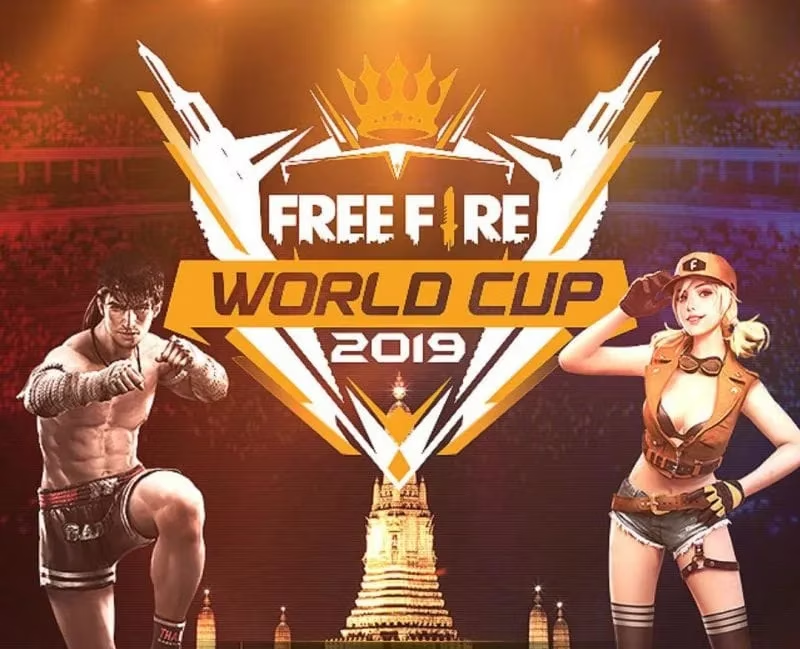
As I look back from 2026, the year 2019 feels like a different era in mobile esports, yet the inaugural Free Fire World Cup (FFWC 2019) remains a cornerstone memory for me as a player and a fan. Hosted in the BITEC Bangna Exhibition Center in Bangkok, Thailand, on April 7th, 2019, it wasn't just another tournament; it was the moment our beloved battle royale game truly announced itself on the global esports stage. The energy, the stakes, and the sheer novelty of it all created an atmosphere that, even seven years later, I can still vividly recall. The promise of seeing the best teams from across the planet clash for the first-ever world title, with a $100,000 prize pool on the line, had the entire community buzzing with anticipation. The fact that entry to the venue was completely free made it a true festival for fans, something I deeply admire and wish more events would emulate today.
The Global Stage and Its Contenders
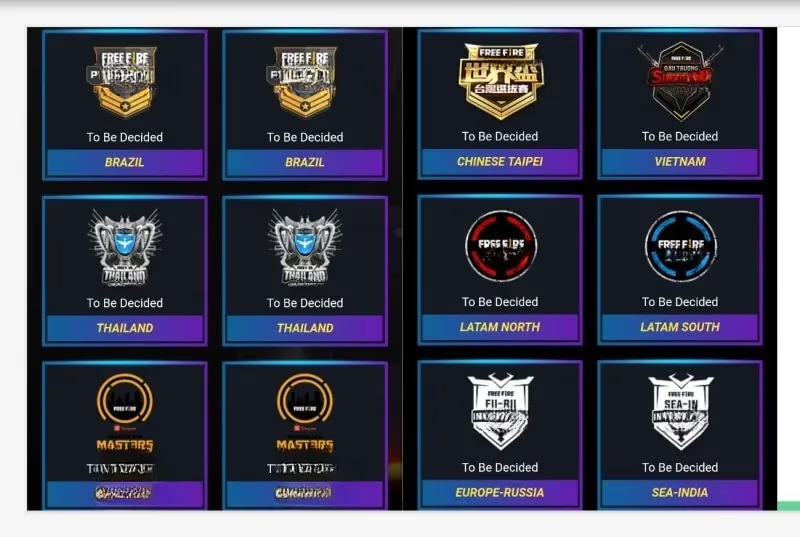
The tournament's structure was a masterstroke in fostering international rivalry. It featured 12 elite teams, each representing the pinnacle of skill from their respective regions. This global representation was crucial. It wasn't just about crowning a champion; it was about validating the competitive scenes sprouting up worldwide. Seeing regions like Latin America, Europe, and Southeast Asia send their best created a beautiful mosaic of playstyles and strategies. For me, the inclusion of an Indian team was particularly thrilling. The winners of the SEA Invitationals for India earned the right to represent their nation, showcasing the game's explosive growth in South Asia. This regional qualification system, pioneered in 2019, laid the groundwork for the sophisticated, multi-tiered circuit we see in Free Fire esports today.
The Crucible of Competition: Format and Maps
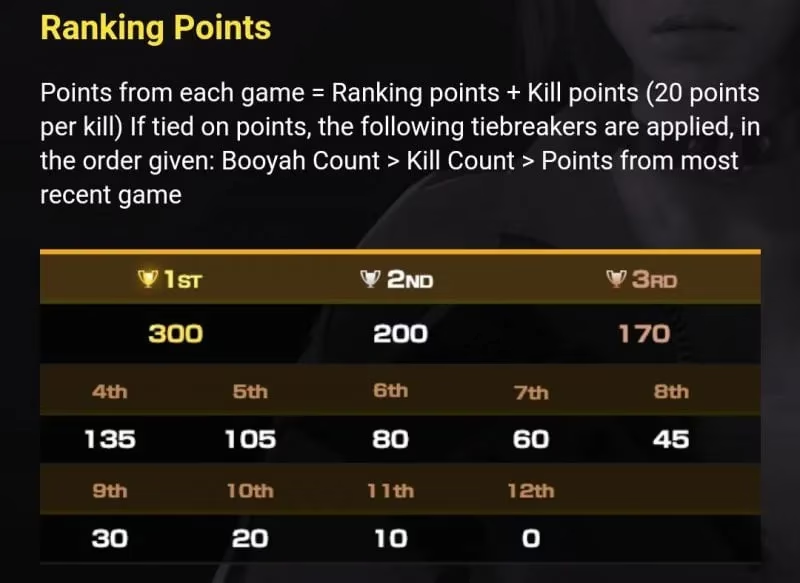
The competitive format was intense and perfectly suited for high-stakes drama. A best-of-seven series meant teams had to demonstrate consistency, adaptability, and mental fortitude. Points were awarded based on a combination of match placement and total kills, a dual-track scoring system that rewarded both survivalist strategy and aggressive playmaking. This created fascinating tactical dilemmas—should a team play for position or hunt for kills? The point calculation was transparent and added a layer of strategic depth that we, as fans, could follow along with in real-time.
The map rotation was another critical strategic element. The alternation between Bermuda and Purgatory tested a team's versatility. Teams couldn't just be specialists on one map; they had to master both to claim the crown. The sequence—Bermuda, Bermuda, Purgatory, Purgatory, Bermuda, Purgatory, Bermuda—was designed to create a narrative, pushing teams to their limits across different terrains and sightlines.
The Prize and The Prestige
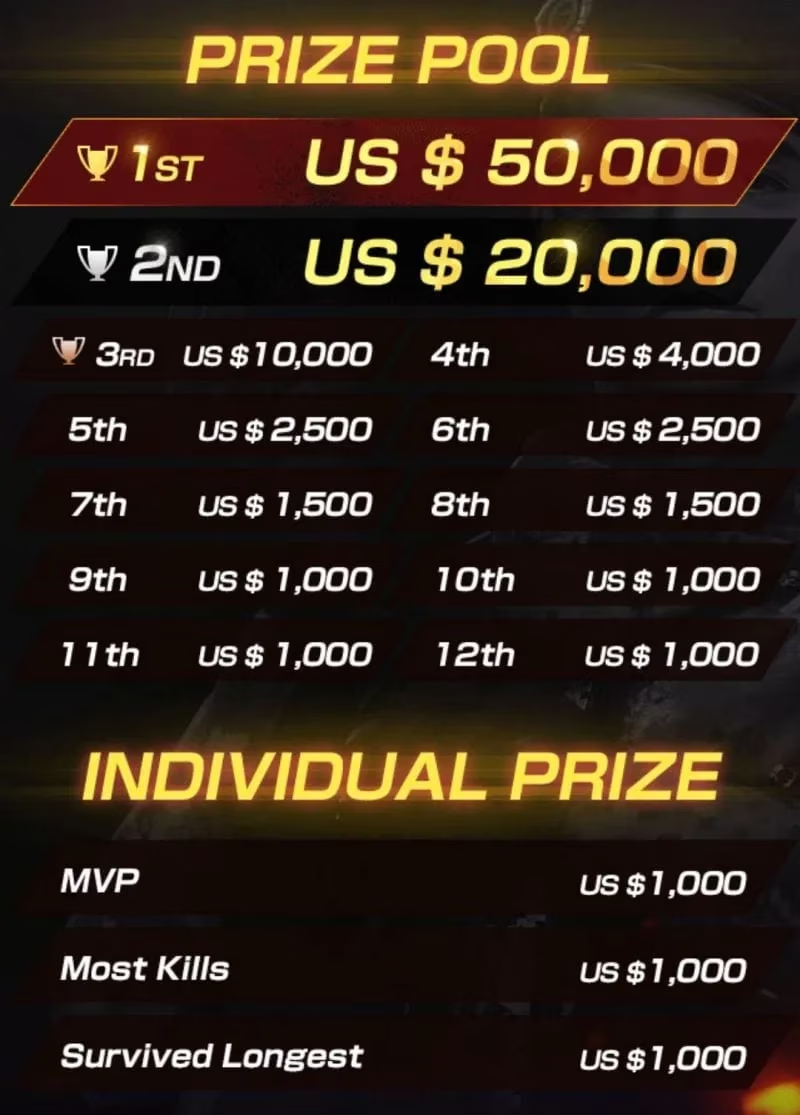
While today's prize pools have skyrocketed, the $100,000 total in 2019 was a monumental statement for a mobile game at the time. The distribution was heavily skewed towards the top, making the fight for the championship even more desperate and rewarding.
| Final Placement | Prize Money (2019) |
|---|---|
| 1st (Champions) | $50,000 |
| 2nd | $25,000 |
| 3rd | $15,000 |
| 4th | $10,000 |
Winning wasn't just about the money; it was about etching your name into history as the first Free Fire world champion. That trophy and title carried a prestige that no subsequent victory could ever quite replicate. The team that stood atop the podium didn't just win a tournament; they became legends, the pioneers who set the first benchmark for excellence.
A Legacy That Shaped the Future
From my perspective in 2026, the FFWC 2019 was the big bang for Free Fire esports. It proved that a mobile-first battle royale game—where 50 players duke it out in fast-paced, 10-minute matches—could host a world-class spectacle. The live streams on the game's social channels broke viewership records for mobile esports at the time, demonstrating a hungry global audience.
That single event in Bangkok catalyzed everything that followed: the professional leagues, the celebrity-owned teams, the multi-million dollar tournaments, and the game's status as a cultural phenomenon. It showed developers, investors, and players alike what was possible. When I watch the sleek, hyper-produced World Series events of today, I always see the DNA of that first, gritty, and passionate World Cup in Bangkok. It was raw, it was real, and it was the moment we all realized we were part of something much bigger than just a game on our phones. We were part of a global sport in the making. :trophy::globe_with_meridians::fire: