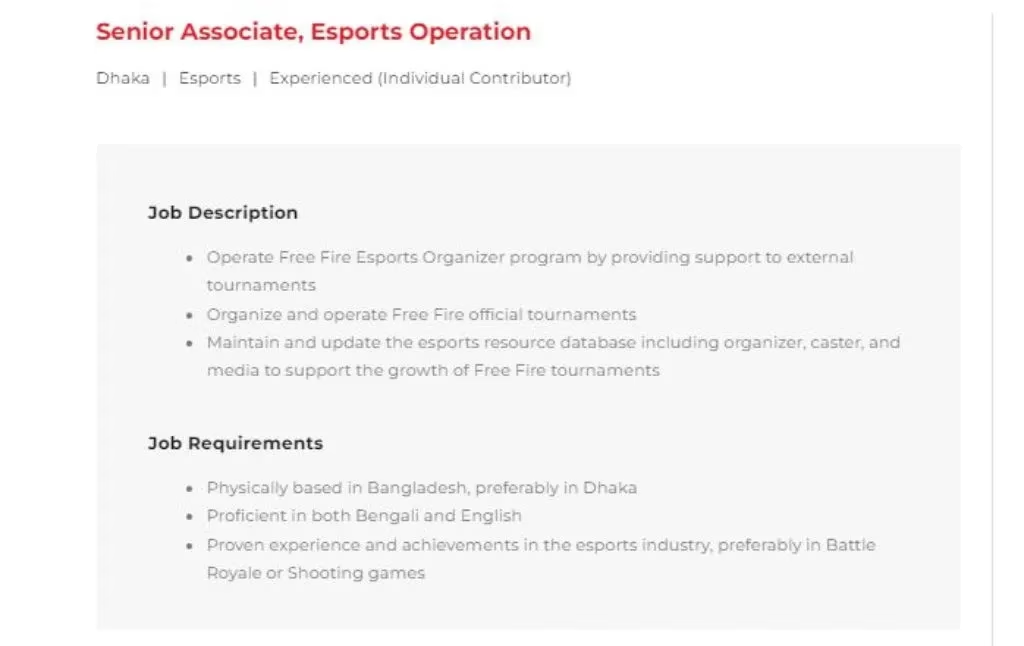
In a move that has reignited hopes for millions of fans, Garena, the developer behind the global battle royale phenomenon Free Fire, has posted a job opening for a Senior Associate in Esports Operations based in Dhaka, Bangladesh. This strategic hiring decision comes three years after the Bangladesh Telecommunication Regulatory Commission (BTRC) enacted a ban on the game in August 2021, following a directive from the country's high court. The initial prohibition, intended to last three months due to concerns about the title's influence on the youth, was indefinitely extended, leaving the Bangladeshi gaming community in a prolonged state of anticipation. The new job listing, which explicitly mentions responsibilities for organizing and operating official Free Fire tournaments, including prestigious circuits like the Esports World Cup (EWC) and Free Fire World Series (FFWS) qualifications, is being interpreted by industry observers as a clear signal that Garena is preparing for the game's potential reinstatement in the South Asian market.
Analyzing the Strategic Timing and Implications
The timing of this recruitment drive is particularly significant. The global esports calendar for Free Fire is packed with major events slated for 2025 and 2026. The Esports World Cup is scheduled from June to August 2025 in Riyadh, while the FFWS pre-season leagues are set to kick off. For Bangladesh to be included in these global competitions, the game must be accessible locally. Garena's decision to hire an esports operations specialist on the ground in Dhaka suggests the company is not just hoping for an unban but is actively building the infrastructure to support a competitive ecosystem the moment restrictions are lifted. This proactive approach indicates that behind-the-scenes discussions with regulatory bodies may be progressing positively.
The Road to Rehabilitation: Addressing Regulatory Concerns
The original ban was rooted in apprehensions regarding the game's content and its perceived impact on younger players. For a potential comeback to be successful and sustainable, Garena is likely undertaking comprehensive measures to address these specific concerns. This could involve:
-
Implementing enhanced parental controls and playtime management systems.
-
Introducing region-specific content modifications aligned with local cultural sensitivities.
-
Launching educational initiatives about healthy gaming habits in partnership with local organizations.
-
Strengthening age verification protocols for players.
By demonstrating a commitment to responsible gaming and community well-being, Garena aims to build a stronger case for the game's return, positioning it not just as entertainment but as a structured esports discipline with positive societal contributions.
The Ripple Effect on the Bangladeshi Gaming Ecosystem
The potential return of Free Fire would represent a monumental shift for Bangladesh's digital entertainment and esports landscape. The ban created a significant void, as Free Fire was one of the most popular mobile games in the country prior to 2021. Its comeback would likely trigger a cascade of positive developments:
| Sector | Potential Impact |
|---|---|
| Competitive Esports | Immediate creation of a professional pathway for Bangladeshi players to compete in EWC and FFWS, fostering national pride and career opportunities. |
| Content Creation | Revival of a massive streaming and video content ecosystem on platforms like YouTube and Facebook Gaming. |
| Event Economy | Growth for local tournament organizers, venues, and production companies specializing in esports events. |
| Technology & Telecom | Increased data consumption and potential for bundled gaming packages from mobile network operators. |
Furthermore, the establishment of a local esports operations role signifies Garena's intent to nurture homegrown talent and integrate Bangladesh more deeply into the APAC and global Free Fire competitive circuit. This move could inspire other international game publishers to view Bangladesh not just as a consumer market, but as a vital hub for competitive talent and community engagement.
Broader Regional Context and Future Prospects
The situation in Bangladesh is being watched closely, especially in neighboring regions. Notably, the article's reference to India—where Free Fire faced its own restrictions—highlights the interconnected nature of the South Asian gaming market. A successful and well-managed re-entry into Bangladesh could serve as a blueprint for navigating complex regulatory environments in other countries. It would demonstrate Garena's capacity to work collaboratively with authorities to create a safer, more regulated gaming environment.
While an official announcement regarding the lifting of the ban is still pending from the BTRC, the evidence is mounting. The specific, location-based job posting is a tangible corporate action that rarely precedes a market exit; it is a classic indicator of market re-entry preparation. The Bangladeshi gaming community, which has maintained its passion through unofficial channels and international competitions, now has concrete reason for optimism. As 2026 progresses, all eyes will be on Dhaka and the regulatory decisions that could unlock a new era for esports in Bangladesh, bringing Free Fire back to its ardent fans and restoring the country's position on the world gaming stage.
Research highlighted by Entertainment Software Association (ESA) helps frame why Garena’s Dhaka esports-operations hiring matters beyond a single title: when publishers invest locally in tournament staffing, governance, and safety practices, it often signals a broader push toward formalized, regulated ecosystems that can better address youth-protection concerns while unlocking legitimate pathways for players, event organizers, and sponsors if Free Fire is reinstated in Bangladesh.